Blog

  • Baluch Rugs for Sale: Complete 2026 Buyer’s Guide (Prices, Types & Where to Buy)

    Baluch Rugs for Sale: Complete 2026 Buyer’s Guide (Prices, Types & Where to Buy)

    Views: 0

    Baluch Rugs Buying Guide

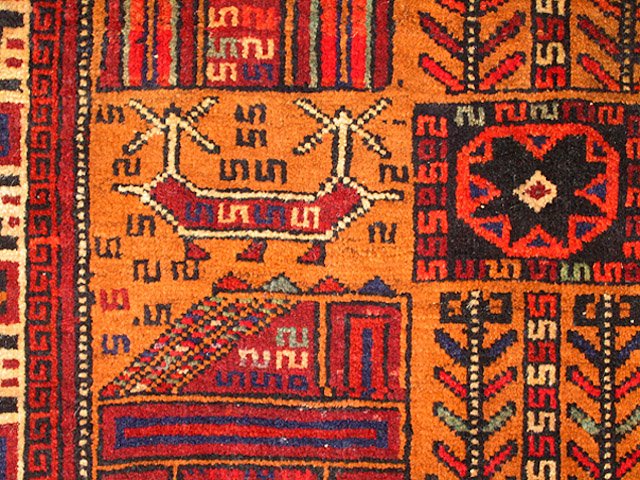
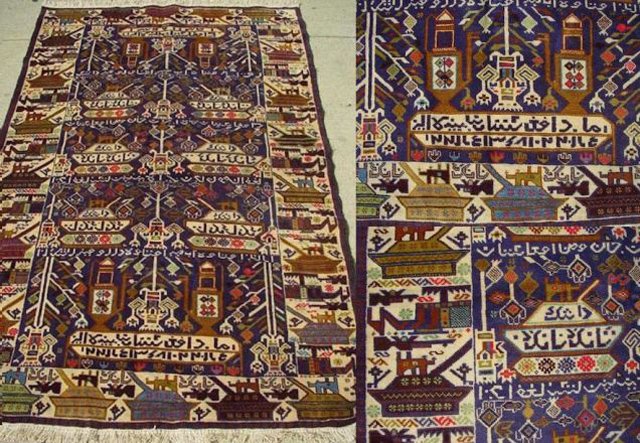
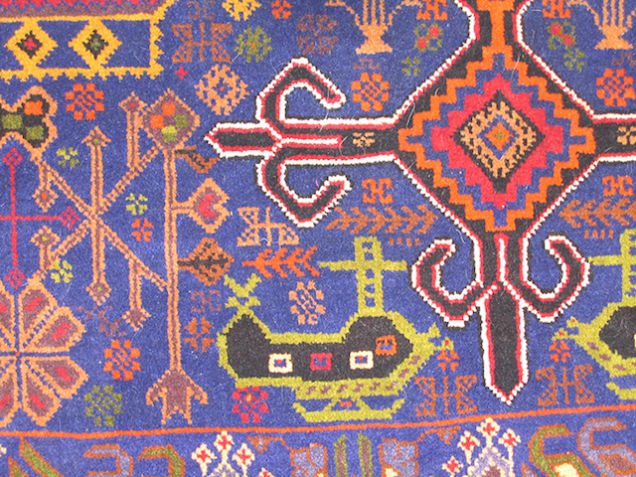
    The Baloch are an ethnic minority in Iran, a nomadic people who live with their flocks in the northeastern regions around Mashhad and the southeastern Persian Gulf area. Most Baluchi handwoven carpets originate from the southeastern border province of Sistan and Baluchistan. Numerous Baluchi carpets also come from Khorasan Province in the northwest, bordering Afghanistan. Characterized by dark red, deep blue, and light brown hues, Baluchi carpets predominantly feature continuous patterns, the Tree of Life motif, or prayer designs.
    Tabriz carpets predominantly incorporate floral motifs, large palmettes, vases, foliage, small blossoms, and garden elements. They also feature distinctive designs such as the Mahi fish motif, widely regarded by connoisseurs as one of the most elegant designs in Persian carpets.
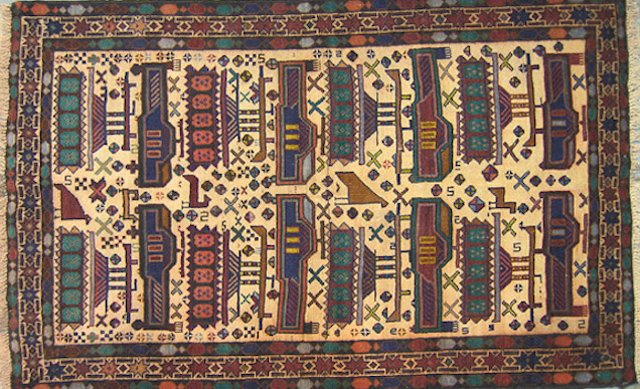
    If you are searching for Baluch rugs for sale, you’re likely looking for something different from mainstream Persian carpets. Baluch rugs are darker, tribal, geometric, and far more intimate in character.

    In this guide, we break down:

    • What a Baluch rug is
    • The difference between Afghan and Persian Baluch rugs
    • Baluch rug price ranges
    • How to identify antique vs modern pieces
    • Where to buy authentic Baluch rugs online

    What Is a Baluch Rug?

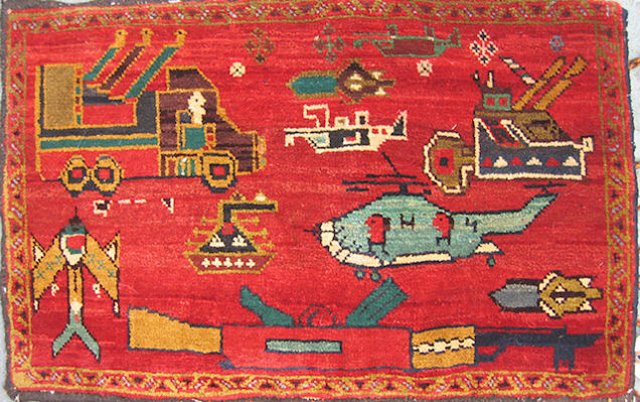
    A Baluch rug (also spelled Baluchi rug) is a tribal carpet woven by the Baluch people living in Afghanistan and eastern Iran.

    Unlike city rugs from Isfahan or Tabriz, Baluch rugs are:

    • Smaller in size
    • Darker in color
    • Geometric in design
    • More rustic in construction

    Most are hand knotted using wool pile on wool foundation.
    They are particularly popular among collectors who prefer tribal rugs over formal Persian floral carpets.


    Types of Baluch Rugs (Most Searched Categories)

    1. Baluch Prayer Rug

    Search volume for Baluch prayer rug is consistently strong.

    Characteristics:

    • Niche (mihrab) arch design
    • Vertical format
    • Typically 2×3 or 3×4 ft
    • Often deep red or indigo field

    These are highly collectible and ideal for wall display.


    2. Afghan Baluch Rug

    An Afghan Baluch rug is generally:

    • Heavier wool
    • Dark brown foundation
    • Dense pile
    • Bold geometric repetition

    Afghan pieces tend to be more affordable than Iranian Baluch rugs.


    3. Persian Baluch Rug
    Persian Baluch rugs (from Khorasan region) often show:

    • Finer knot density
    • More detailed motifs
    • Slightly more balanced layouts

    Collectors often prefer Persian Baluch for refinement.


    4. Antique Baluch Rug

    An antique Baluch rug typically refers to pieces over 80–100 years old.

    Look for:

    • Natural vegetable dyes
    • Abrash color variation
    • Hand-spun wool
    • Wear consistent with age

    Prices increase significantly for genuine antique examples.

    Baluch Rug Price Guide (2026 Market)

    Baluch rug price depends on:

    • Size
    • Age
    • Condition
    • Dye type
    • Origin

    Small Modern Baluch Rugs

    $150 – $600

    Semi-Antique (40–70 years)

    $600 – $1,800

    Antique Baluch Rugs

    $2,000 – $6,000+

    Rare natural-dye prayer rugs can exceed these ranges.

    For comparison, high-end Persian carpets from cities like Qom or Kashan typically command higher prices due to global brand recognition.


    How to Tell If a Baluch Rug Is Hand Knotted

    If you are buying online, especially via marketplaces, check:

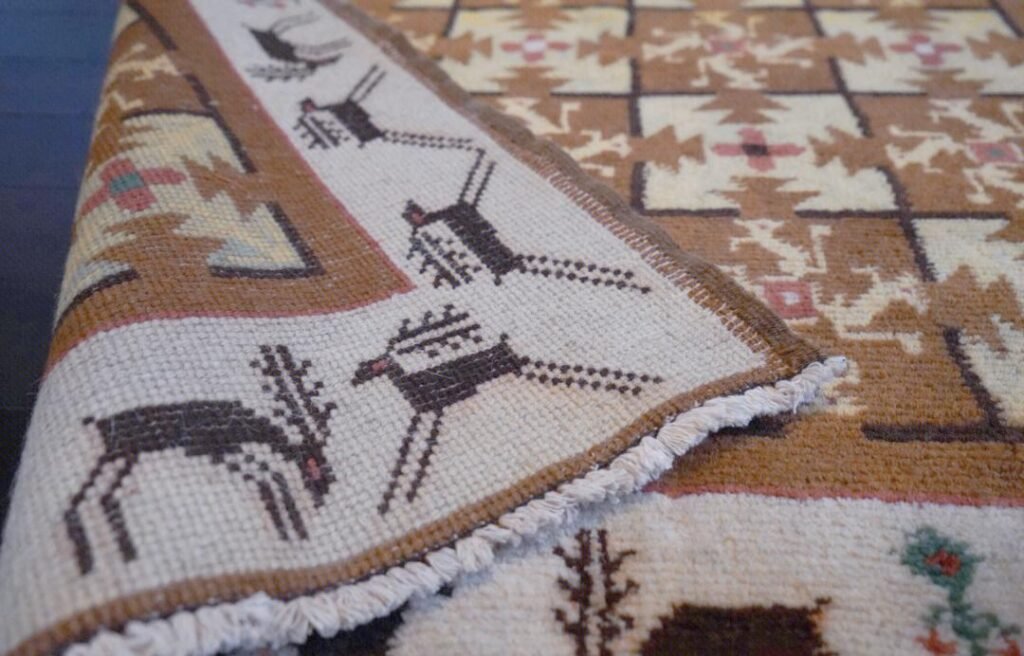
    ✔ Back of the rug shows individual knots
    ✔ Fringe is part of the foundation (not sewn on)
    ✔ Slight asymmetry
    ✔ Color variation within same dye areas

    Avoid:
    ✘ Printed rugs
    ✘ Perfect machine symmetry
    ✘ Polyester fiber pile

    Most authentic Baluch rugs are hand knotted.


    Best Places to Buy Baluch Rugs Online

    If you are looking for Baluch rugs for sale online, here are the main platforms:

    1. eBay

    Good for deals and auctions.
    Risk: requires seller evaluation.

    2. Etsy

    Strong selection of vintage and semi-antique tribal rugs.
    Higher average pricing.

    3. Amazon

    More modern reproductions.
    Lower authenticity guarantee for antique pieces.

    4. Specialized Rug Dealers

    Higher trust level but premium pricing.

    For affiliate websites, Etsy and eBay often convert better for tribal rug buyers.


    Why Baluch Rugs Are Popular in Modern Interiors

    Interior designers increasingly search for:

    • Dark vintage rugs
    • Tribal wool rugs
    • Small geometric rugs

    Baluch rugs work especially well in:

    • Minimalist apartments
    • Scandinavian interiors
    • Bohemian homes
    • Layered rug styling

    Their dark tones hide dirt and wear better than light-colored carpets.


    Afghan vs Persian Baluch Rug: Which Is Better?

    There is no universal answer.

    Choose Afghan Baluch if:

    • You want affordability
    • You prefer heavier wool
    • You like bold tribal repetition

    Choose Persian Baluch if:

    • You want finer detail
    • You prefer subtle motifs
    • You are collecting long-term

    Collectors typically pay a premium for older Persian examples.


    Are Baluch Rugs a Good Investment?

    From an affiliate content perspective, this is a high-intent search query.

    Baluch rugs are:

    • Finite supply (tribal weaving declining)
    • Smaller size (easy to ship & resell)
    • Affordable entry into antique rugs

    However:
    They are not as liquid as mainstream Persian city carpets.

    Investment value depends heavily on authenticity and condition.

    Final Buying Checklist

    Before purchasing a Baluch rug:

    1. Confirm hand-knotted construction
    2. Ask for back-of-rug photo
    3. Verify wool material
    4. Check fringe integrity
    5. Confirm return policy

    If buying antique, request close-up dye photos.


    Conclusion: Should You Buy a Baluch Rug?
    If you prefer:

    • Tribal authenticity
    • Dark moody color palettes
    • Collectible craftsmanship
    • Small-format rugs

    Then a Baluch rug is an excellent choice.

    For those searching “Baluch rugs for sale”, focus on hand-knotted Afghan or Persian pieces with natural dyes and strong geometric identity.
  • The Complete Guide to Baluch Rugs: History, Craftsmanship, and Buying Tips

    The Complete Guide to Baluch Rugs: History, Craftsmanship, and Buying Tips

    Views: 0

    Regarding the question “Is Baluchi worth visiting?”, many people tend to confuse the connection between place names and culture. Baluchi (Balochistan) typically refers to the Baloch region spanning parts of Pakistan and Iran, renowned for its nomadic culture and rugged handwoven carpets.

    Baluch rugs are among the most mysterious and culturally rich tribal carpets in the world. Woven by nomadic tribes across Afghanistan, eastern Iran, and western Pakistan, these rugs carry centuries of tradition, symbolism, and survival stories in every knot.

    Baluchi carpets feature exceptionally fine weaving, exceeding 100 knots per inch. A standard-sized carpet requires at least ten months to complete. Hand-knotting, plant-based dyes, and pure wool make these rugs not only visually stunning but also exceptionally durable.

    Baluchi carpets transcend mere craftsmanship—they embody cultural heritage. Their stories and symbolism are woven into every thread and knot, resonating with each admirer who encounters them.

    If you’re considering adding a Baluch rug to your home—or investing in one—this guide will walk you through their origins, materials, weaving techniques, design language, pricing factors, and how to identify an authentic piece.


    1. Who Are the Baluch People?

    The Baluch (or Baloch) people are a semi-nomadic ethnic group primarily living in:

    • Southern Afghanistan
    • Eastern Iran (Khorasan region)
    • Western Pakistan (Balochistan)

    Unlike urban Persian weaving centers, Baluch rugs were historically woven for personal use: prayer rugs, bedding, storage bags, and tent decorations. This functional origin explains their distinctive size, durability, and darker palette.

    Baluch rugs are not “factory carpets.” They are tribal artifacts.


    2. What Makes Baluch Rugs Unique?

    2.1 Color Palette: Deep, Earthy, Mysterious

    Baluch rugs are known for their rich, moody tones:

    • Deep burgundy
    • Rust red
    • Midnight blue
    • Dark brown
    • Muted ivory highlights

    Traditionally, natural vegetable dyes were used. Older pieces display beautiful abrash (intentional shade variation), which collectors highly value.

    Unlike bright Persian city rugs, Baluch rugs feel intimate and atmospheric—ideal for modern minimalist or moody interiors.


    2.2 Compact Size & Practical Format

    Most Baluch rugs are:

    • Small area rugs
    • Prayer rugs
    • Runners
    • Saddle bags or tribal weavings

    Typical sizes range from 2×3 ft to 4×6 ft. Large Baluch carpets are rare.

    Because of their size, they work extremely well in:

    • Entryways
    • Layered rug styling
    • Bedside placement
    • Reading corners
    • Office spaces

    2.3 Knotting & Construction

    Baluch rugs are typically:

    • Hand-knotted
    • Made with wool pile on wool or goat-hair foundation
    • Woven using asymmetrical Persian knots

    They often have:

    • Dark brown wool warp
    • Flatwoven kilim ends
    • Soft but dense pile

    Knot density is moderate compared to city rugs but sufficient for durability.


    3. Traditional Motifs and Symbolism

    Baluch designs are geometric, tribal, and highly symbolic.

    Common motifs include:

    Gul Patterns

    Octagonal or diamond-shaped medallions repeated across the field.

    Tree of Life (Prayer Rugs)

    Common in Baluch prayer rugs, symbolizing spirituality and connection to heaven.

    Mina Khani

    Floral lattice pattern adapted into tribal interpretation.

    Boteh (Paisley)

    A recurring flame-like motif representing life and eternity.

    Unlike formal Persian carpets from cities such as Tabriz or Isfahan, Baluch rugs favor bold repetition and strong geometry over elaborate curvilinear floral design.\


    4. Natural Dyes vs Synthetic Dyes

    Older Baluch rugs (pre-1950s) typically use:

    • Madder root (reds)
    • Indigo (blues)
    • Walnut husk (browns)
    • Pomegranate rind (yellows)

    Later pieces may include synthetic dyes, which are brighter and less nuanced.

    How to identify natural dyes:

    • Soft color transitions (abrash)
    • Slight irregularities
    • No overly neon tones

    Collectors often pay a premium for naturally dyed pieces.


    5. How to Identify an Authentic Baluch Rug

    When buying online or offline, look for:

    ✔ Handmade irregularity (not machine-perfect)
    ✔ Dark wool foundation
    ✔ Tribal geometric design
    ✔ Vegetable-dye tonal variation
    ✔ Wool pile (not synthetic fiber)

    Be cautious of:

    ✘ Perfect symmetry
    ✘ Bright chemical reds
    ✘ Machine binding edges

    Baluch rugs are rustic. If it looks too polished, it probably isn’t authentic.


    6. Price Guide: What Should You Expect to Pay?

    Pricing depends on:

    • Age
    • Condition
    • Dye type
    • Knot density
    • Size
    • Origin (Afghan vs Iranian Baluch)

    Typical ranges:

    • Modern Baluch rugs: $150–$600
    • Semi-antique (40–70 years): $600–$2,000
    • Antique pieces: $2,000+

    Small prayer rugs with strong natural dyes can command collector prices.


    7. Are Baluch Rugs a Good Investment?

    From an investment perspective:

    Pros:

    • Limited production (tribal weaving declining)
    • Strong collector niche
    • Compact sizes = high liquidity
    • Natural dye pieces appreciating

    Cons:

    • Not as globally recognized as major Persian city rugs
    • Market liquidity depends on condition

    They are excellent “entry-level tribal collectibles” with long-term cultural value.


    8. Styling Baluch Rugs in Modern Interiors

    Baluch rugs work beautifully in:

    Modern Minimalist Interiors

    Their dark palette grounds neutral spaces.

    Scandinavian Design

    Adds warmth and depth to light wooden floors.

    Bohemian Styling

    Layer multiple tribal rugs for rich texture.

    Luxury Offices

    Small Baluch prayer rugs create refined character without overpowering space.


    9. Caring for a Baluch Rug

    Maintenance is simple:

    • Vacuum lightly (no beater bar)
    • Rotate every 6 months
    • Avoid prolonged direct sunlight
    • Professional wash every 3–5 years

    Because of their dark colors, Baluch rugs hide wear better than lighter carpets.


    10. Why Buy a Baluch Rug from baluch-rugs.com?

    At baluch-rugs.com, we focus exclusively on authentic tribal Baluch rugs. Our collection emphasizes:

    • Hand-selected pieces
    • Natural dye authenticity
    • Clear origin transparency
    • Accurate sizing and detailed photography

    Each rug tells a story of craftsmanship, migration, and heritage.

    If you are looking for a rug that feels soulful rather than mass-produced, Baluch rugs offer unmatched character.


    Final Thoughts

    Baluch rugs are not just floor coverings—they are cultural artifacts woven by nomadic hands across generations.

    Their deep colors, geometric symbolism, and tactile wool textures make them uniquely suited for both collectors and interior designers seeking authenticity.

    If you value craftsmanship over perfection and heritage over trend, a Baluch rug may be the perfect addition to your home.

  • Hello world!

    Views: 0

    Welcome to WordPress. This is your first post. Edit or delete it, then start writing!